Ozempic, Wegovy, Mounjaro, Zepbound — A Plain-English Map
Why the GLP-1 name confusion matters more than you think.

Ozempic, Wegovy, Mounjaro, Zepbound, and the New Pill — A Plain-English Map
What each drug actually is, what it's approved for, and how to tell them apart without a pharmacy degree.
Why the GLP-1 Name Confusion Matters More Than You Think
If you've asked your doctor about 'Ozempic for weight loss' and walked away confused, you're not alone. The brand names, generic names, approved uses, and dosing schedules across this medication class form a maze that even well-meaning pharmacists sometimes get wrong.
What Nobody Explains: Same Molecule, Different Label
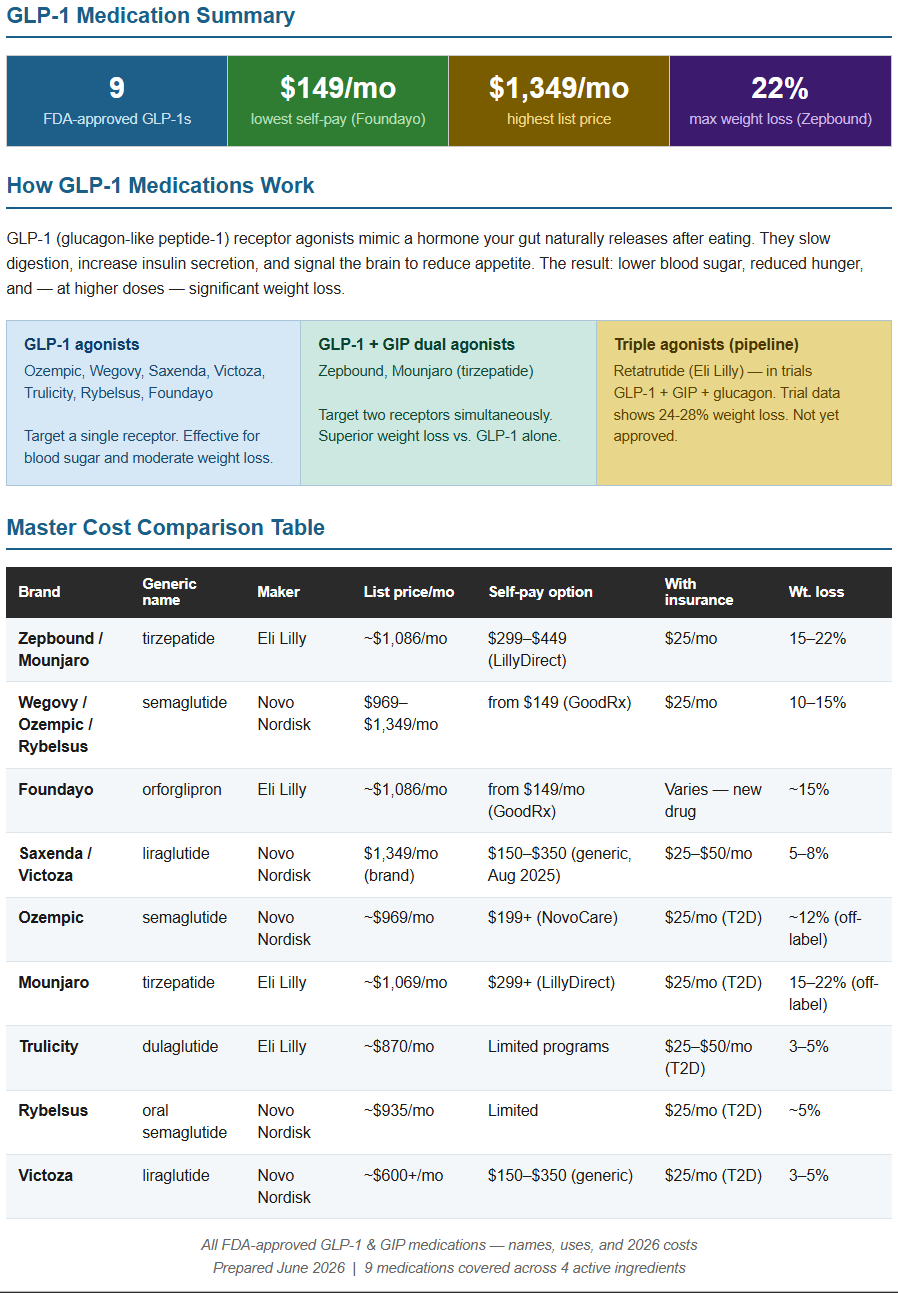
Ozempic and Wegovy contain the exact same molecule — semaglutide — but they're FDA-approved for different conditions and come in different dose ceilings. Ozempic tops out at 2mg and is approved for type 2 diabetes. Wegovy goes to 2.4mg and is approved for chronic weight management. Similarly, Mounjaro (tirzepatide for diabetes) and Zepbound (tirzepatide for obesity) are the same drug with two labels.
How I Made Sense of the Options — 3 Questions I Asked My Doctor
What am I actually being prescribed — the diabetes version or the obesity version? I asked my doctor to spell it out and write down the brand name, generic name, and the indication (why it's being prescribed).
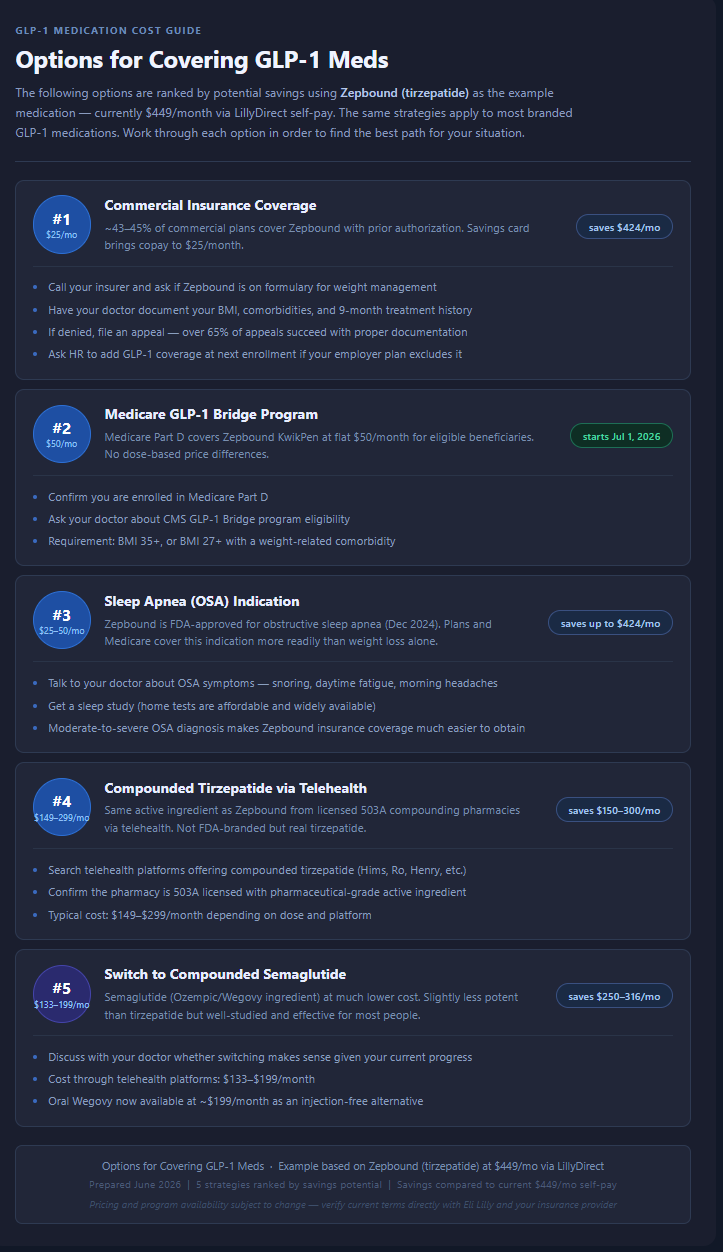
Is this covered under my diagnosis code? Ozempic is often covered under a T2D code; Wegovy under obesity. If you're being given an 'off-label' prescription, your insurer may deny it. I pay out of pocket monthly with a discount from manufacturer for about $449. I am gambling the meds will be covered in future insurance plans as the benefits versus the cost are shown and generics are more widely available. But that will be years from now. So, I will start by asking my insurance company for coverage and appeal if they deny it and show my results. If that doesn’t work I will eventually go to a compounded version of Zepbound to save money.
Are there clinical reasons to prefer one over another? Tirzepatide targets both GIP and GLP-1 receptors, while semaglutide targets only GLP-1 — which is why tirzepatide tends to produce slightly higher average weight loss in trials. I picked Zepbound and continue to use it successfully to lose weight.
What I Tracked When Starting a New Medication
I kept a simple weekly log: my injection day, any side effects (nausea, fatigue, GI changes) rated 1–5, and my appetite level throughout the week. That log became invaluable at my follow-up appointment because I could show patterns instead of guessing. The best part was that I didn’t have much to log at all. I didn’t experience a bunch of side effects. I might have had some nausea the first day or two after the shot for short periods of time. I’ve never really had all the side effects listed. That’s not true for everyone. Some people get really sick on the meds and need to stop. Keeping a log and following doctor’s orders works best. What else helps? What makes the difference? It’s what you eat and how much you eat can still be an issue on the meds. Check for specific nutrition guidelines when you are on GLP-1 meds. I found I couldn’t eat like I used to eat and didn’t really want to. Wasn’t that the point? To change habits and what I was eating to have a good result? If the side effects are to great to handle or you are miserable - Remember: report issues to your physician immediately.
A Starter Movement Routine That Works Alongside Any GLP-1
No matter which medication you're on, the exercise prescription is similar: two to three resistance sessions per week, plus daily movement. On injection days, some people feel lower energy — that's a reasonable day for a walk, not a lifting session. Plan your harder workouts for days 3–5 after your shot.
Stay steady out there,
Alex — Steadyafter50.com