
Confession time: I’m an Ozempic user, and for months I was walking around mildly dehydrated without realizing it. My appetite was down, my thirst cue was practically gone, and I’d get to 3 p.m. having had one cup of coffee and maybe a few sips of water. Then came the headaches. The afternoon brain fog. The constipation that made me question every life choice.
Turns out, hydration isn’t just a wellness-influencer talking point when you’re on a GLP-1. It’s the single most important habit for a GLP-1 med user — and especially for older people.
How much water do you actually need?
Here’s the simple version most experts circle back to — half your body weight in ounces, every day:
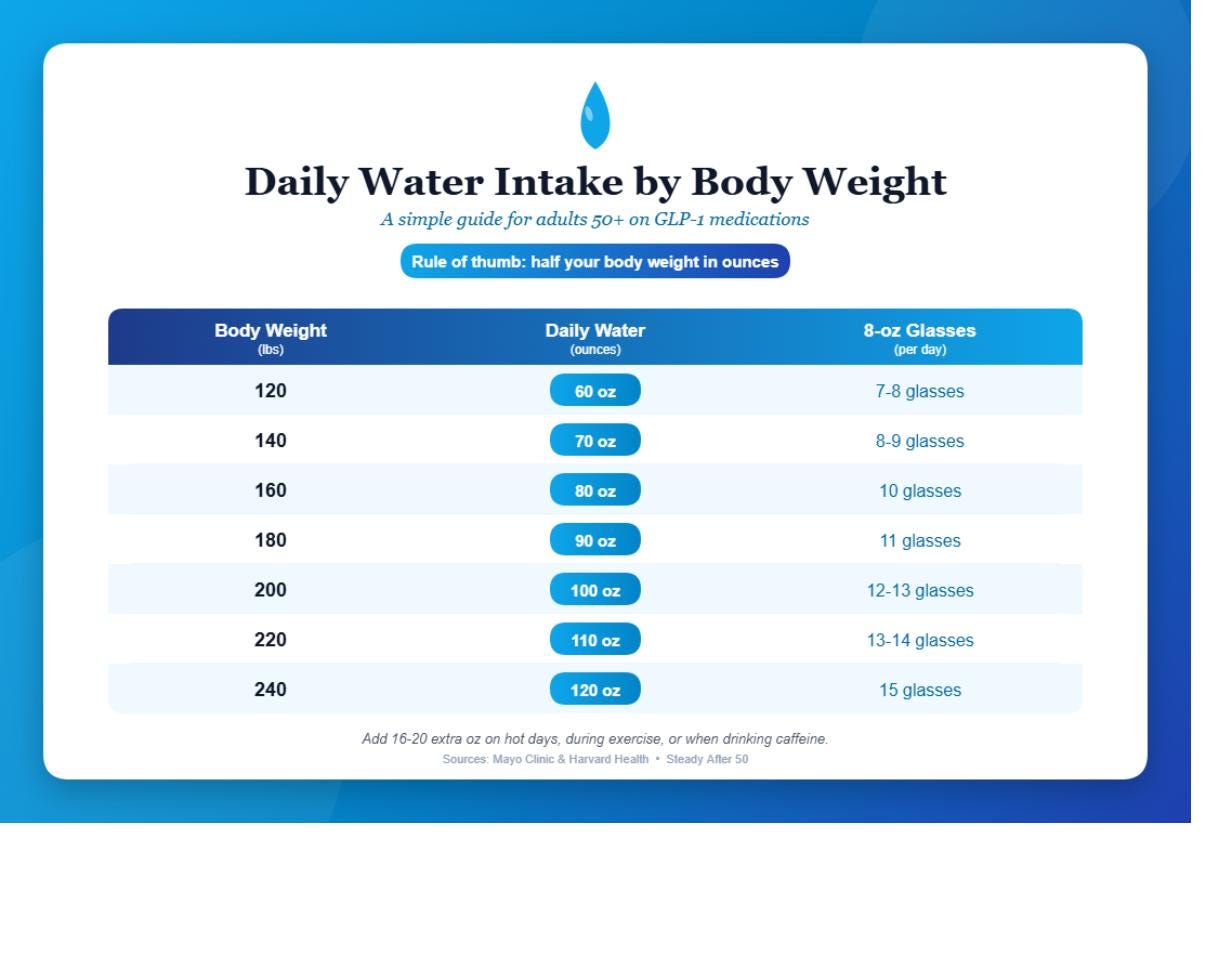
The Mayo Clinic puts the average adult target at roughly 11.5 cups (women) to 15.5 cups (men) of total daily fluid, and Harvard Health notes that older adults often need more attention to hydration because our thirst signals naturally weaken with age. Add a GLP-1 to that, and the signal goes from quiet to nearly silent.
Why GLP-1s make hydration trickier
Ozempic, Wegovy, Mounjaro, and Zepbound all slow down gastric emptying. That’s how they help us feel full longer — but it’s also why a lot of us feel less thirsty, less hungry, and slightly off. According to Healthline’s overview of Ozempic, dehydration on these meds can lead to dizziness, headaches, fatigue, and in serious cases, kidney injury. The FDA literally lists “dehydration resulting from nausea, vomiting, or diarrhea” as a safety consideration before starting the drug.
Translation for the rest of us: if you’re on a GLP-1, water is no longer optional. It’s part of the prescription.
What enough water actually does for you
Once I started hitting my target consistently, a few things shifted:
Digestion got moving again. Constipation is one of the most common GLP-1 complaints, and water is the cheapest, easiest fix.
The afternoon slump faded. Even mild dehydration drains energy and clouds thinking.
Headaches got rarer. Mine were almost always dehydration in disguise.
Skin looked less “tired.” Not a miracle, but noticeable after 50.
My kidneys got some grace. GLP-1s can stress the kidneys when you’re dry.
My five rules for actually drinking enough
Front-load the morning. I drink 16 oz of water before my coffee. Non-negotiable.
Pair water with every pill, every meal. It piggybacks on a habit I already have.
Use a marked bottle. I use a 32-oz bottle and aim to refill it twice. No counting cups.
Count the helpers. Tea, milk, broth, sparkling water, and even coffee count. So do watermelon, cucumbers, soup, and yogurt — Mayo Clinic says food gives us about 20% of our daily fluid.
Add electrolytes when needed. On hot days, after exercise, or after GI side effects, I add a low-sugar electrolyte mix. It helps the water actually stay in.
A quick caution
If you have kidney, heart, liver, or thyroid issues — or you’re on diuretics — talk to your doctor before chugging gallons. More isn’t always better. Harvard Health specifically warns that some conditions and medications make over-hydration risky, and a rare condition called hyponatremia (too-low sodium) can be dangerous.
The bottom line
On a GLP-1, your body lost its loudspeaker for thirst. You have to be the loudspeaker now. Half your body weight in ounces is the floor — bump it up on hot days, exercise days, or when side effects flare.
I’m not perfect at it. But the days I hit my number, I feel like a different person at 63 than the days I don’t.
Stay steady out there.
— Alex, Steady After 50
———
Disclaimer: I am not a doctor, dietitian, or medical professional. The content of this newsletter — including any references to GLP-1 medications, hydration, nutrition, or health topics — is based on personal experience and publicly available information from sources such as the Mayo Clinic, Harvard Health, and Healthline. It is provided for informational and educational purposes only and is not intended as medical advice, diagnosis, or treatment. Always consult your physician or a qualified healthcare provider before making changes to your diet, hydration, exercise, or medication routine, especially if you have an existing medical condition or are taking prescription drugs. Steady After 50 and its author assume no responsibility for any actions taken based on this content.